A sluggish economy and a slow recovery hasn’t stopped three sustainability trends from staying strong in the food industry.
Two annual reports from the Food Marketing Institute show that the following are hot topics among grocery retailers:
A sluggish economy and a slow recovery hasn’t stopped three sustainability trends from staying strong in the food industry.
Two annual reports from the Food Marketing Institute show that the following are hot topics among grocery retailers:
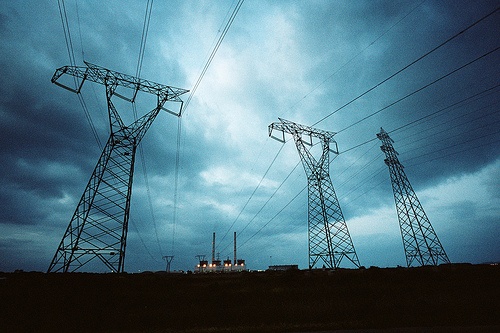
Mircogrids are independent, small-scale electricity systems for communities, towns, campuses, or even individuals. A prime location for a microgrid is any type of campus: educational, commercial, government, healthcare, industrial, or research-based.
Fast Company calls microgrids “the impatient upstarts of our energy future.” They’re sprouting up in response to the slow development of the broader, nationwide smart grid. They’re delivering what customers are demanding, and slower-moving utilities are not yet capable of delivering: integrated, distributed renewable energy; improved reliability; personal energy use data; and customized control.
Here in Vermont, you can be looking at scenes of complete devastation, and then drive 20 minutes to a community that has been completely unharmed by Hurricane Irene’s recent rampage through the state.
It raises questions of grid resiliency in the wake of disasters, which we blogged about earlier in the year, in the wake of Japan’s tragedy.
Despite rebates and grants, home energy efficiency improvements can be costly. Then there’s that nagging homeowner worry: Will this solar installation/water conservation technology/energy efficient appliance raise the value of my home?
It might be great for the environment, but is there anything in it for me beyond reduced utility costs?
Phil Carson at Intelligent Utility recently spotted this on a LinkedIn’s Smart Grid Executive Forum thread.
Participants were discussing the fact that utilities must communicate what they’re doing to make sure electricity is being delivered efficiently, even as they ask consumers to adopt more energy efficient measures and behaviors. That’s the new social compact between utility and consumer.
Ogilvy Earth took a look recently at consumers’ intentions and behavior around purchasing sustainable products and services.
One interesting survey result: Going green is seen as “more feminine than masculine.” More men in the study identified as Green Rejecters, while the Super Greens were disproportionately female.
Consumer Experience Managers – they’re the ones bringing about change in utilities. They’re trying to spread the message within their own organizations about the need to become consumer-centric.
Why is this such a tough sell within utilities? Transformational change is never easy for organizations, of course, but it goes deeper than that. Christine Hertzog of Smart Grid Library gives a few reasons specific to the industry.
“Don’t celebrate closing a sale; celebrate opening a relationship.”— Patricia Fripp
You know what new business is like? It’s like dating. It’s fun, it’s flirty, and if you send the wrong signals, it’s over.
EnergyWire is KSV’s weekly insight into the consumer mindset when it comes to energy. It’s an honest conversation on the reality of their perceptions and motivations, and how energy services companies can use this insight to successfully engage customers.