“Don’t celebrate closing a sale; celebrate opening a relationship.”— Patricia Fripp
You know what new business is like? It’s like dating. It’s fun, it’s flirty, and if you send the wrong signals, it’s over.
“Don’t celebrate closing a sale; celebrate opening a relationship.”— Patricia Fripp
You know what new business is like? It’s like dating. It’s fun, it’s flirty, and if you send the wrong signals, it’s over.
At KSV, we do a lot of digging to find out what’s happening in the world of consumers. “Local” and “organic” are two buzz words that come up time and again in our food-specific research. Though these terms have come to be simple labels for most of us, they actually represent two very important questions – where did this product come from, and how was it made?
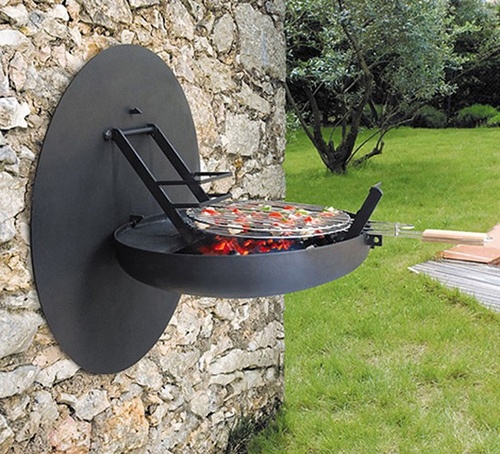
The same questions should be asked about other products as well, even products we don’t ingest. Indeed, many outdoor brands are developing creative ways to respond to these questions.
Back in, say, 2009, carbon reduction was the holy grail of corporate good citizenship.
The U.S. House of Representatives passed the American Clean Energy and Security Act. The business world was expecting some form of carbon regulation, whether in the form of a tax or cap-and-trade legislation. Business enterprises were looking at their environmental balance sheets, and thinking about positioning themselves to be able to deal with imminent federal energy policy.
As an early adopter of social media, I’m always curious how new social media tools can be used to help build brands and business. But before I dive in and use them professionally, I prefer to explore them on a personal level.
Investor-owned utilities (IOUs) have a sometimes tense relationship with energy efficiency. They earn profits by building more power plants and transmission lines, and by selling more, not less, power. They’ve got to be responsive to their shareholders and maximize profits, and that gives them few reasons to actually promote energy efficiency.
In fact, IOUs – which account for about 8% of all utilities, but 75% of revenues, nationwide – have traditionally fought against tougher efficiency standards.
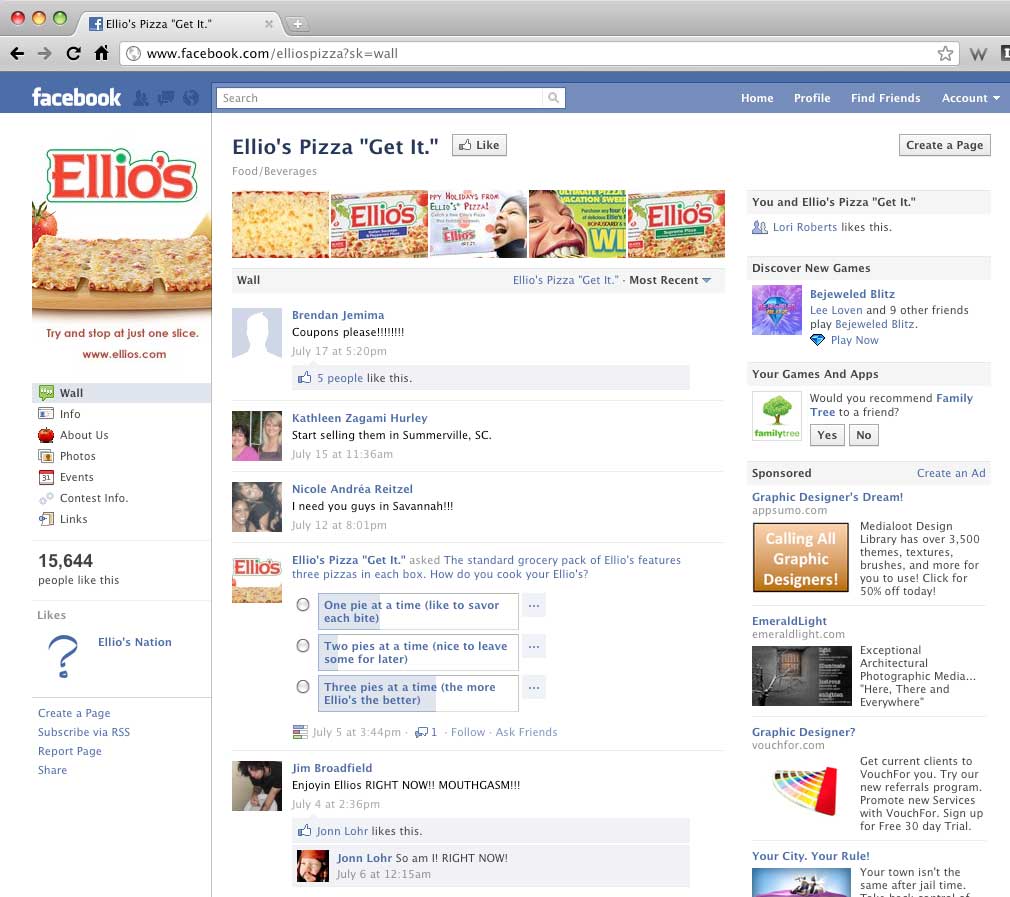
Facebook is littered with the remains of poorly executed brand pages. Fact is, opening a facebook account and placing random content onto your page will not generate the response that companies are looking for.
Building a brand presence on Facebook requires planing and effort. It demands constant management and attention. And in many cases, it starts with listening to what people are saying about the brand right now.
Jim Merriam is the director of Efficiency Vermont and he has done a remarkable job distilling and explaining Smart Grid to Vermonters. Vermont will be one of the first states with a statewide Smart Grid, thanks to a $69 million federal grant and matching funds from the state's electric utilities, and so will need a Smart Grid-educated populace.
Jim's op-ed was published recently in the Rutland Herald. Read it here:
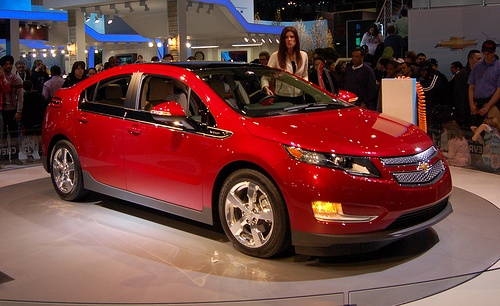
General Motors and its subsidiary OnStar have launched a pilot program with regional utilities that takes us one step closer to large scale adoption of electric vehicles.
We’re excited about it, and we’re rooting for it.
Check out the innovation on this cheesy brand. Kraft Mac & Cheese has
introduced “Smile Tagging” which enables interweb users to share a
smile with their online social connections.
EnergyWire is KSV’s weekly insight into the consumer mindset when it comes to energy. It’s an honest conversation on the reality of their perceptions and motivations, and how energy services companies can use this insight to successfully engage customers.